Introduction
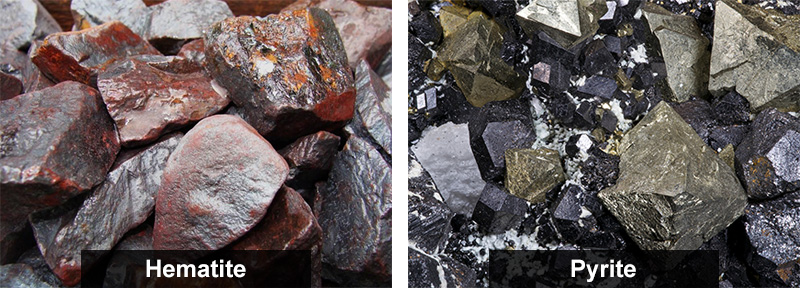
Iron ore is a foundational raw material for modern industrial development. Iron ore beneficiation improves ore quality by removing impurities and increasing iron content, transforming run-of-mine ore into concentrate suitable for steelmaking and other industrial applications.
With increasing demand for high-grade iron ore and depletion of rich deposits, beneficiation plants play an important role in efficient resource utilization and sustainable mining operations.
1. Why Choose an Iron Ore Beneficiation Plant?
A properly designed iron ore beneficiation plant can increase the value of low-grade ore and improve downstream processing efficiency.
Higher Market Value
Beneficiation can upgrade low-grade run-of-mine ore to approximately 62%–68%+ Fe concentrate, depending on ore characteristics and the selected flowsheet.
Cost Efficiency
Removing waste minerals before downstream processing can reduce transportation requirements and smelting slag volumes.
Environmental Compliance
Improved resource utilization can help minimize tailings and make better use of available mineral resources.
2. Iron Ore Beneficiation Process
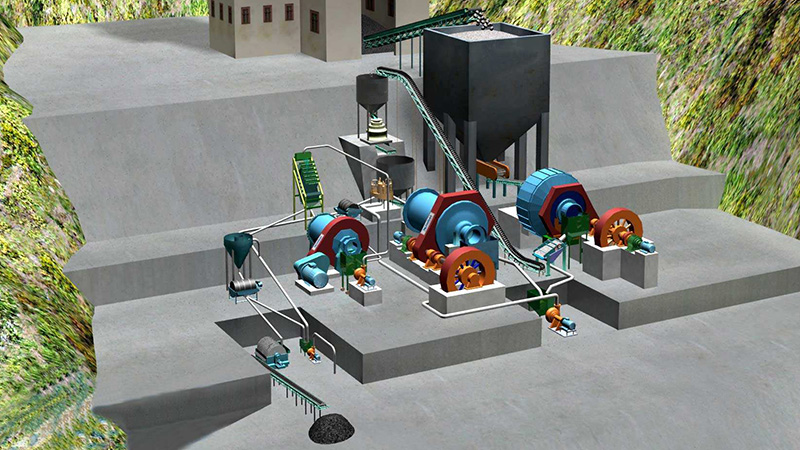
A typical iron ore beneficiation process consists of crushing and screening, grinding and classification, followed by mineral separation. The exact flowsheet should be customized according to mineralogical characteristics, processing capacity and target concentrate quality.
Stage 1: Crushing & Screening Circuit
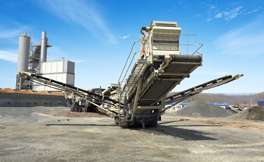
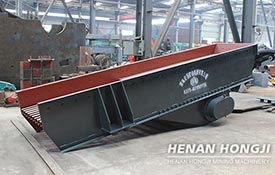
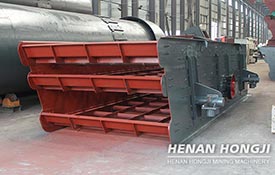
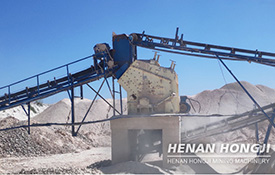
Process: Raw Iron Ore → Vibrating Feeder → Jaw Crusher (Primary) → Cone Crusher (Secondary) → Vibrating Screen.
The jaw crusher handles coarse crushing of raw ore, while the cone crusher provides secondary size reduction. Screening controls the product size and can return oversize material for further crushing.
Stage 2: Grinding & Classification Circuit
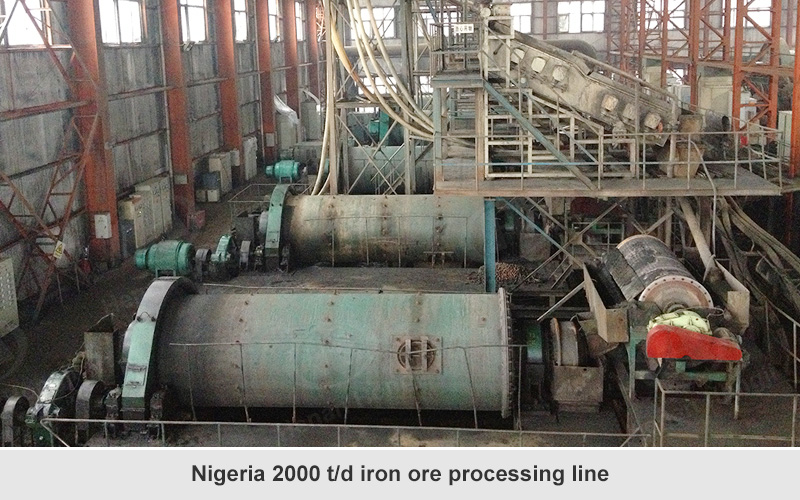
Ball mills grind iron ore into fine particles through impact and grinding action. Rod mills can be selected where reduced over-grinding and a more uniform particle size are desired.
Stage 3: Mineral Separation
The main beneficiation techniques include gravity separation, magnetic separation and flotation.
Magnetic separation uses differences in magnetic properties between iron minerals and gangue minerals. Gravity separation separates minerals according to density differences. Flotation exploits differences in mineral surface properties and is useful for fine and micro-fine iron ores and certain low-grade or complex ores.
3. Complete Iron Ore Beneficiation EPC Solution
A successful mineral processing project requires more than individual machines. A complete EPC approach can integrate engineering, procurement, equipment manufacturing, construction, installation, commissioning and training.
Phase 1: Engineering & Feasibility Analysis
HONGJI Machinery begins with metallurgical testing of raw ore samples to analyze mineral structure, impurity levels and iron recovery potential. Based on test results, process engineers develop a customized flowsheet, plant layout, equipment sizing and resource-efficiency plan.
Phase 2: Equipment Manufacturing & Global Procurement
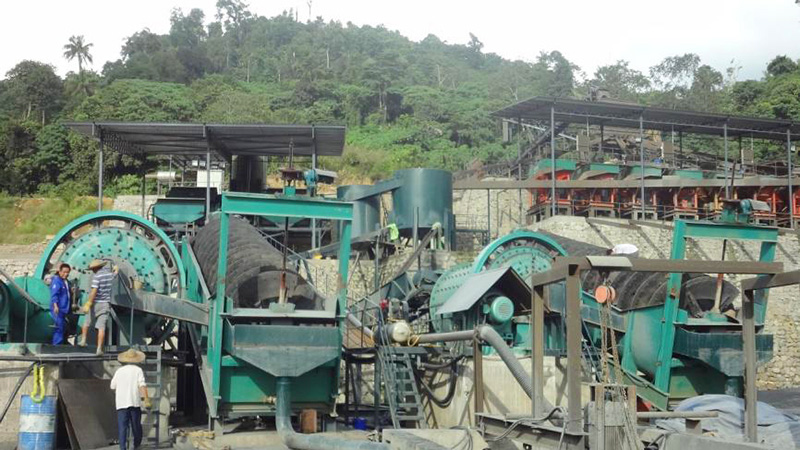
Core equipment can include crushers, ball mills, magnetic separators and flotation systems. Auxiliary systems may include slurry pumps, automated controls and wear-resistant pipelines. Factory acceptance testing and logistics coordination are also part of the project execution described in the source material.
Phase 3: Construction, Installation & Commissioning
Field engineers can support civil construction, steel structure assembly, equipment installation, commissioning and staff training, with the objective of bringing the plant to stable operation.
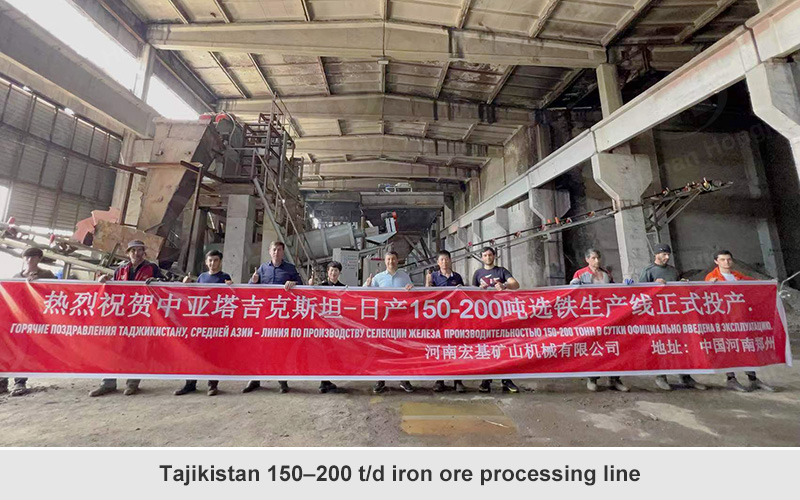
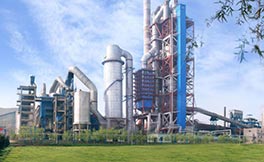
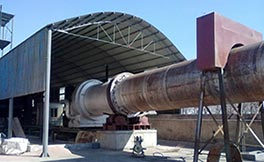
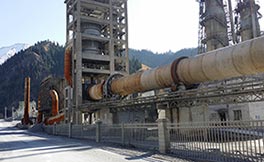
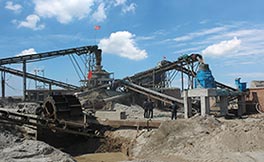
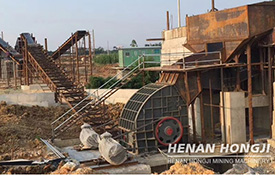
4. HONGJI Iron Ore Beneficiation Cases
5. Frequently Asked Questions
Q: What is the target iron grade after beneficiation?
A: The source indicates that many industrial plants upgrade low-grade ore containing approximately 30%–45% Fe to concentrate in the range of about 62%–68% Fe, depending on ore characteristics and processing technology.
Q: How do I choose between Magnetic Separation and Flotation?
A: Magnetic separation is generally associated with strongly magnetic ores such as magnetite, while flotation is applicable to fine-grained, non-magnetic or complex ores. Mineralogical and beneficiation tests should guide the final choice.